Councils refuse a large number of HMO planning applications each year. Many refusals come as a surprise to landlords, but most follow a familiar pattern. Councils tend to focus on the same issues, apply the same tests and raise the same concerns. Once you understand how they assess HMO proposals, the decisions they make are far less mysterious.
If you are unsure whether planning permission is required in the first place, you may find my article on when a HMO needs planning permission a useful starting point:
This article explains the most common reasons councils refuse HMO applications and what you can do to give your proposal the best chance of success.
Applications that are unacceptable in principle
The first hurdle is whether the council considers the proposal acceptable in principle. Many councils now have policies that restrict HMOs outright in certain situations. These policies vary, but the most common types are:
- policies preventing the conversion of family houses to HMOs
- policies restricting HMOs in areas already affected by concentrations of shared housing
- thresholds that specify the maximum proportion of HMOs within a set radius
If your proposal conflicts with one of these policies, the council may reject it regardless of how well designed or well managed the HMO would be. No amount of extra information or revised drawings will overcome a clear “in principle” objection.
Many of the strictest decisions arise in areas covered by Article 4 directions. I have explained how these operate in my article on Article 4 Directions and HMO planning:
These are usually the most difficult refusals to overcome. Unless the council has misapplied its own policy or misunderstood the facts, approval is unlikely at application stage. Appeals can succeed, but only in particular circumstances.
Environmental impacts and practical concerns
Where the council accepts a HMO in principle, it will then consider the specific impacts of your proposal. These objections are more flexible and, in many cases, can be addressed through careful design and good supporting information.
Character of the area
Councils often refer to the “character” of a residential street. A single HMO may not change much on its own, but in areas already under pressure, the council may argue that another shared house will tip the balance. This is most likely near universities or in streets where neighbours are already sensitive to change.
Your task is to demonstrate that the HMO fits comfortably into its surroundings and will not harm the area.
Noise and disturbance
Noise is a frequent concern. Councils fear that unrelated adults, coming and going at different times, will lead to more disturbance than a single household.
A clear HMO Management Plan can be very helpful here. It shows that you have anticipated potential issues and have arrangements in place to manage them.
Quality of accommodation
Councils assess the internal layout of a HMO closely. They look for reasonable bedroom sizes, adequate shared space, safe circulation and good natural light. Cramped layouts and poorly designed communal areas are common reasons for refusal. Larger HMOs attract more scrutiny, as councils associate them with higher levels of activity.
A well-planned layout, offering generous and comfortable accommodation, strengthens your case considerably.
Parking and servicing
Parking is a perennial issue. Some councils accept that HMO residents own fewer cars; others assume the opposite. If streets are already congested, the council may argue that the HMO would worsen parking stress.
Provide whatever evidence you can: controlled parking zones, public transport links, cycle storage and local car ownership trends all help.
Practical matters such as bin storage and access for bikes are also important. These should be shown clearly on the plans.
When the council raises ‘need‘
A small number of councils require applicants to show that there is a need for the accommodation proposed. This is difficult to evidence and, in many cases, unreasonable. No landlord invests in a HMO unless they believe there is demand.
If your council has a “need” test, supply whatever information you can. It may not resolve the issue entirely, but it demonstrates that the question has been addressed.
Errors or inconsistencies
Not all refusals are well reasoned. Councils sometimes misinterpret their own policies, double-count HMOs or overlook relevant evidence. Errors like these are difficult to correct during the application process but can provide grounds for a successful appeal.
Reading officers’ reports for similar applications is invaluable. It shows how the council applies its policies and what it is likely to prioritise.
These issues reflect a wider shift in how councils approach HMOs, which I discussed in HMO investors beware – the planners are coming:
How to avoid refusal
Although individual decisions vary, most HMO refusals can be traced back to a handful of issues. Good preparation reduces the risk significantly.
Understand the policies.
Before applying, read the council’s local plan and any supplementary guidance. Look at recent HMO decisions in the area and make sure you understand how similar proposals have been treated.
Prepare a strong submission.
Accurate plans, a concise supporting statement and a HMO Management Plan all help the council to understand the proposal and how it will operate.
Deal with the details.
Show clearly how bins, cycles and parking will be managed. Provide good internal layouts and explain any unusual design decisions.
Engage carefully.
A polite enquiry near the end of the determination period can be useful. Do not contact the case officer repeatedly; it is more likely to harm than help.
If you are refused
A refusal is not the end of the process. Many HMO applications are refused first time around, especially in Article 4 areas. You may be able to revise and resubmit, or you may have good grounds for an appeal.
If you have received a refusal, my article on whether it is worth appealing a planning decision sets out the main considerations:
For landlords facing more urgent action, you may also find guidance in my article on what to do if you receive a planning enforcement notice:
Conclusion
Councils refuse HMO applications for a mixture of policy and practical reasons. Some proposals fail because they conflict with policy at the outset; others fail because the applicant has not addressed concerns about design, neighbours or the local environment. Most of these issues can be anticipated and, with care, resolved.
A well-prepared application that deals with the council’s policies directly stands the best chance of success.
To learn more…
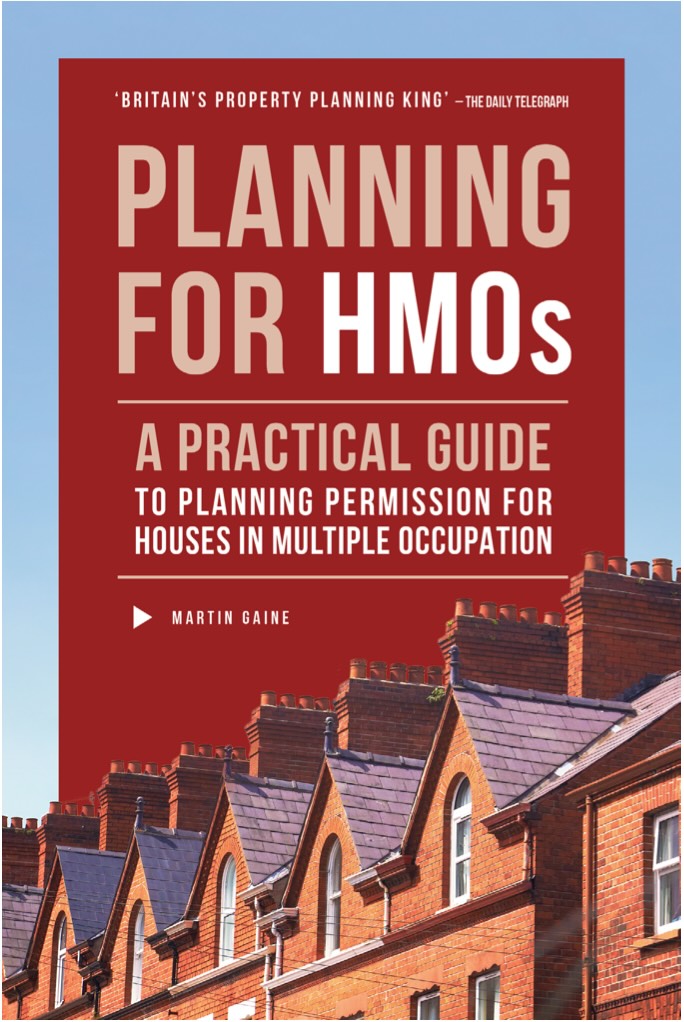
If you would like a fuller explanation of how HMO planning works, my book Planning for HMOs sets out the rules in plain English, with examples drawn from real cases. You can find it at www.martingaine.com/hmos.
If you need help with a specific property, my team at Just Planning advises on applications, appeals and enforcement matters for landlords. More details are available at www.just-planning.co.uk.